

Materials to Create More Worlds
Or: the time I followed a dog into the wilderness without bear spray

Hi friends!
I have a post cooking with resources, worksheets, and guides on building one’s own mutual support pods. It’s not quite ready.
So I decided to revisit two essays I wrote this time last year on effort, ease, land, and embodiment. Paid subscribers can read both original essays here and here. Unlike this revision, there are a lot of people in both. Newbies can enjoy this abridged, consolidated, revised take here.
Light Hive offers weekly essays on embodied and engaged mindfulness. Upgrading to paid ($8/month, $2/essay) supports my work and provides discounts to workshops.
Five years ago, my therapist Nancy tasked me with something that felt impossible: plan a vacation for myself. I had all the reasons to say no: no time, no money, no one to watch my cats.
Around that time, I listened to an audiobook versions of Philip Pullman’s His Dark Materials trilogy. In it, the orphaned protagonist Lyra Belacqua grows up under scholastic sanctuary at Jordan College, Oxford. Her unknown parentage makes up a significant aspect of the narrative. While one could say Lyra was never really alone—she was accompanied by her daemon (her soul, her counterpart), Pantalaimon—much of her character development happens through estrangement.
It took effort from Lyra to become herself, even when she was geographically and emotionally lost, unsure who or what to trust. Out of necessity, she became a masterful tactician with courage and the willingness to re-invent herself, no matter the danger.
I feel strong resonance with Lyra. I also have amorphous parentage and a daemon: my cat, Fischer. He is a soulmate, a teacher, and one of my life’s greatest loves.
Nancy’s vacation exercise felt fantastical, so I followed Lyra to the North, in search of the consciousness her world called “dust.”
I chose a lodge for its sustainability goals and respect for indigenous tribes, from whom they still defer to in terms of land permissions.
Blachford Lake Lodge is within the arctic circle, 60 kilometers from the closest town, where I would have a 90% chance of seeing the northern lights during a three night stay. These four days would cost me about 8% of my annual salary.
And the forecast prior to leaving was cloudy but, by then, I couldn’t back out.
So I went.
land, rich with sound
Effort can mean the grip you keep on both grief and gratitude, material realities and imagination. Reality includes ease, exploration, and potential.
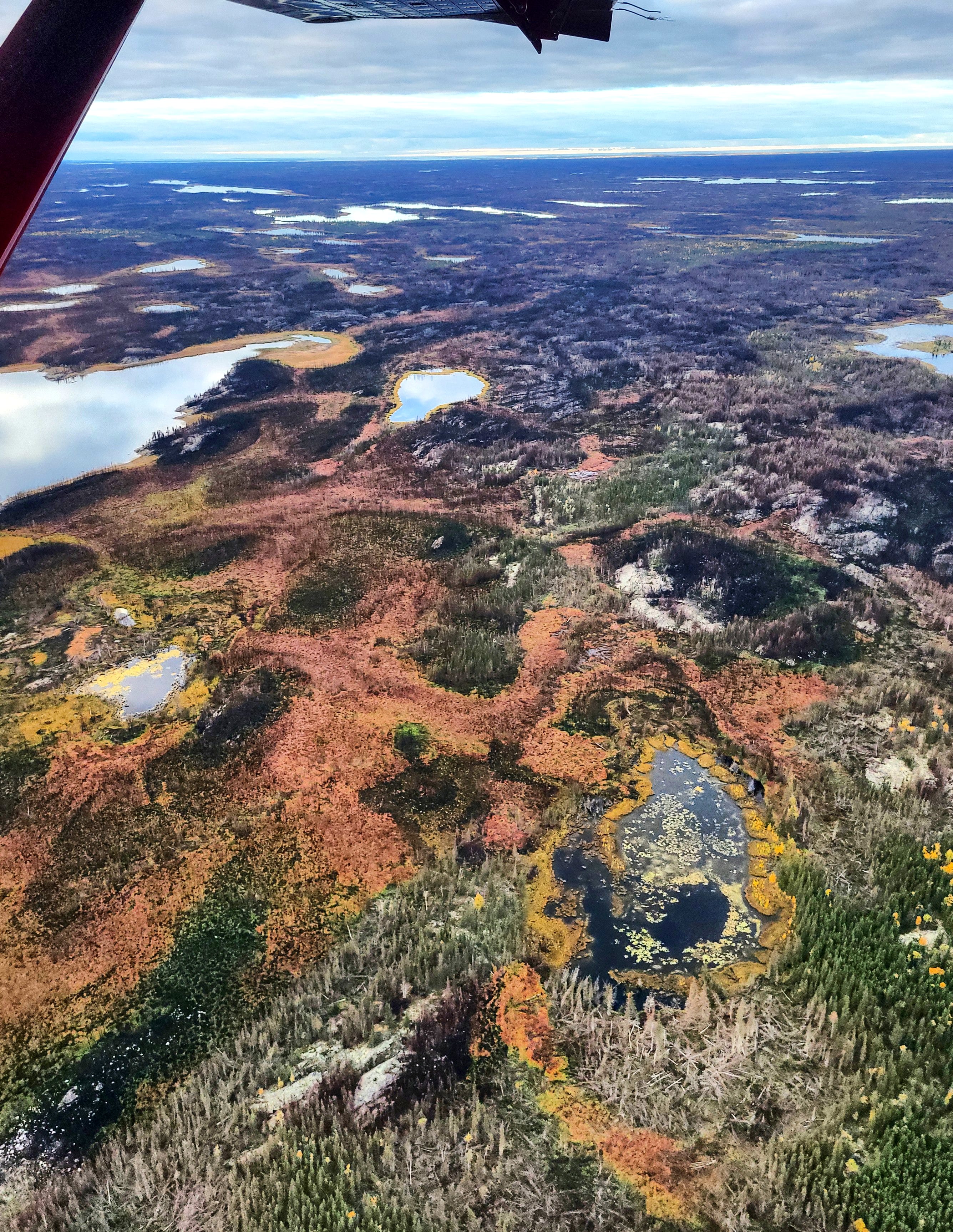
In September 2024, I was flying over greens, yellows, grays, and pink granite that constitute the desert tundra of Canada’s Northwest Territories. The vast expanses of land hid nothing; the black wildfire scars contrasted the vibrant autumn palette.
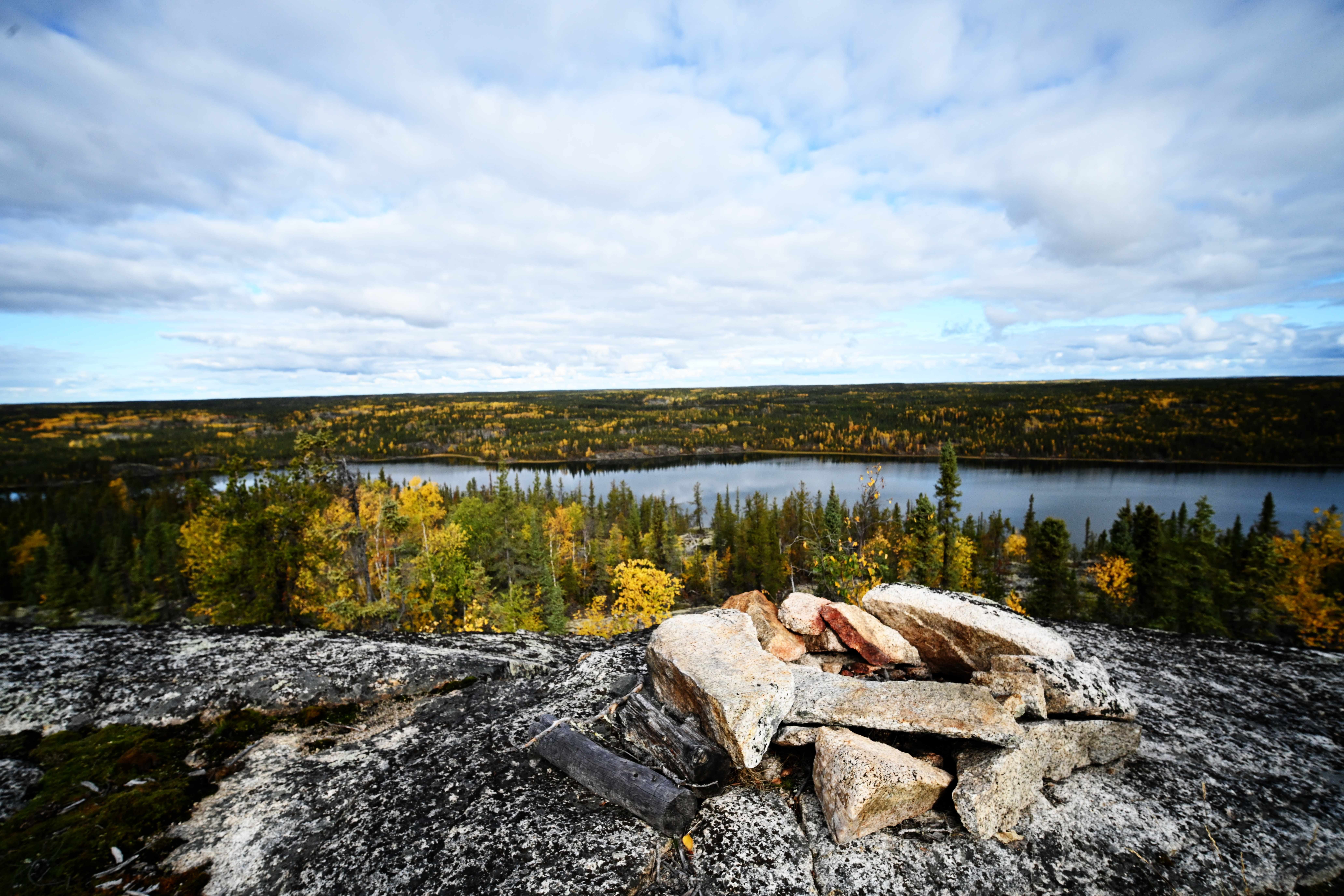
At the lodge, my first activity was following a trail of ribbons to a lookout. I peed at the summit, reveling in how I didn’t urinate all over my pants and shoes. (After doing this two too many times, it’s a real concern.) I sat on the bench to marvel at the open sky, land for kilometers, and calm lake waters.
I remember my fellow guests mentioning how “quiet” it was. I offered that when I calmed my breath, I could hear individual leaves breaking from branches and landing on the earth. I could hear water running somewhere in the distance. I could hear my walking stick pull up from soft ground. Quiet, yes, and rich with sound.
On the second day, one of the guides, Cat, took me across the bay to walk around an otherwise inaccessible area. She showed me different plants made to make tea, and Inukshuk rock statues indicating someone else had passed through.
I asked how far she’d explored in this area and she said, not much, actually. I asked, can we look around some more? We continued until the woods were too thick to pass.
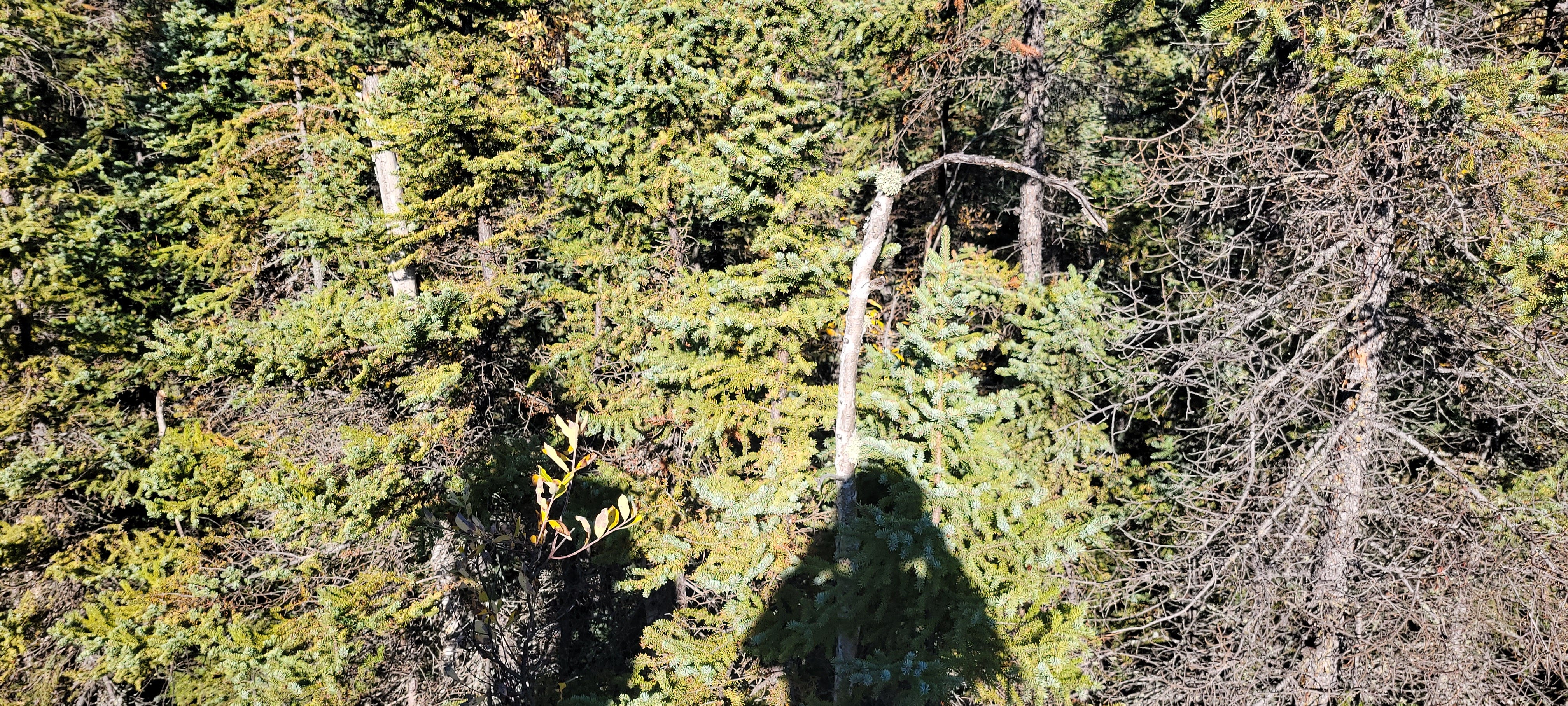
The density felt Shakespearean. In Macbeth, the three witches prophesized about Great Birnam Wood coming to attack Dunsinane. Macbeth is like, “Whatever hags, BYEEE.” Cat didn’t know the play, but returned that the trees likely shared roots. We were standing in a forest of trees feeding each other and sheltering everything that passed, including me and my reference to the Scottish tyrant.
Those shared roots can teach us about non-self and interdependence. Imagine beyond the family tree to a landscape of generosity. That’s reality.
That afternoon, I followed one of the lodge dogs off-trail. Upon return, I breathlessly shared, “Tuck’s a great guide! He took me off-trail to a bunch of really cool spots!”
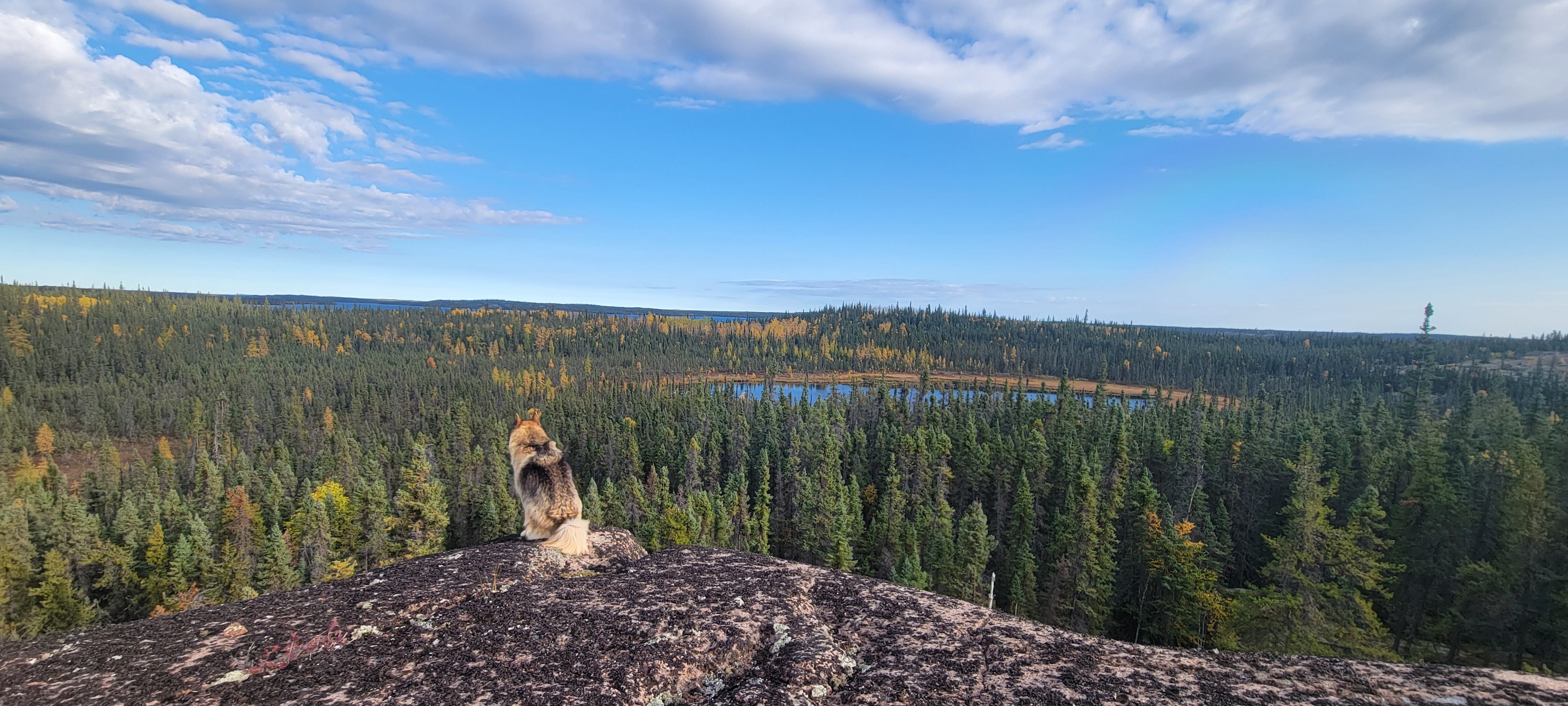
The lodge manager said to stop following animals to random places in the untamed forest and reminded me the closest hospital was 2.5 hours away by helicopter. (The lodge isn’t connected to any roads.) Fair. Skillful effort isn’t hubris or ignoring our bodies and material contexts.
And YOLO. The final day, I ventured with no map, no trail, no GPS, and was rewarded with wild-looking mushrooms, flat granite slopes, and bridges from I’m not sure when.
But the real test wasn't navigating unknown trails—it was staying present when the thing I'd come for finally arrived.
to create more worlds
This world orients us toward win-states and competition, as if outcomes are certain and meritocracies are real. They are not. Effort less. Play more.
A few days before my trip, the forecast was gloomy. There were active wildfires to the southwest, and I was afraid that between the smoke and rainclouds, I’d be spending half a year’s worth of discretionary funds to do things I could have done at home.
Even at dinner the first night, we chatted about the low likelihood of seeing the lights. We went outside and set up cameras, hopeful, but our Aurora tracking apps kept saying it wasn’t going to happen.
I was the only guest who didn’t go to bed. I stayed in the dining room playing Cassi Mothwin’s Carved by the Garden. My character was an actor preparing for a role, increasingly drawn to the mysteries of the woods. I created scenes involving burning journal pages in my favorite creepy island shack.
Around 11 PM, my app said the aurora might be visible. I went to the late-night guide, Jonathan, to ask. He said, “unfortunately, no.” I returned to my story to murder some hunters (they killed squirrels!).
Some minutes later, Jonathan came back. Actually, yes! There’s a small flow forming.
I sprung into action. I knocked on Monica and Imelda’s door first, then on Natalie’s. Having already heard me knock on the other door, she was standing behind it and scared the crap out of me.
This is what we had come for. Here it was! I did it!
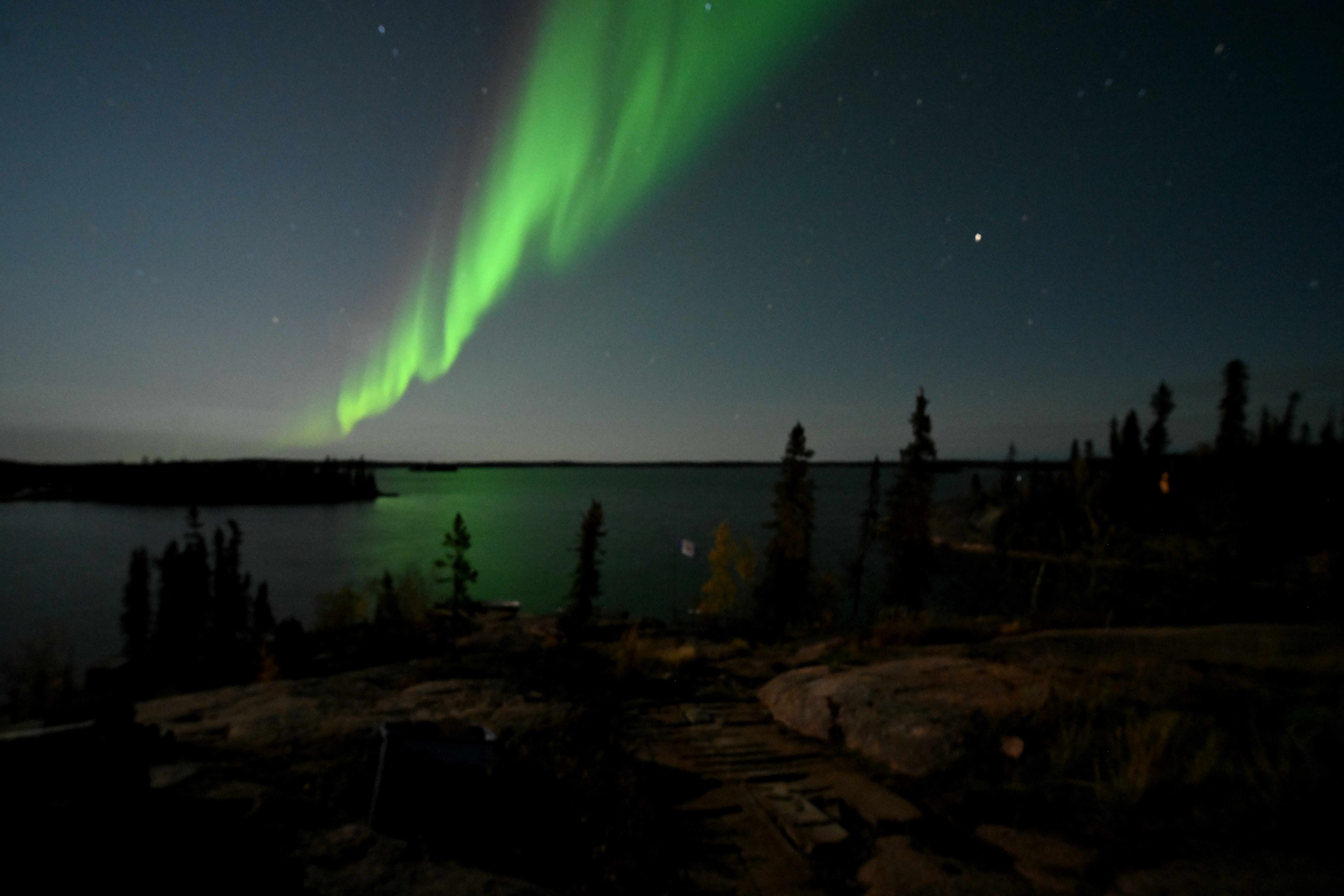
As the lights danced in and out of view, I realized how much of my attention was on capturing this moment instead of living it.
How can one experience nature with a perspective limited by their camera lens? How can one “heal,” when bound to the logic and context of what wounds them? What, exactly, is “wellness” in cultures that refuse to honor the death of a pet, the grief of a relinquished infant, let alone discuss a dying planet?
Because I have no idea, I paused to just be in my body. I’m efforting towards a life well-lived. Living > proof of presence.
I experienced the changing colors, the new rivers of light that came and went. I felt the cold, listened to the water lapping, the ghosts of slain hunters crying in pain (/loon?/howling wolf? We all had guesses, but it was a windmill). The air was clean and mildly scented with spruce, lake water, and—if you really tried, really went that extra mile—hot chocolate.
I stood still, soaking all this water-meets-earth-meets-sky grandeur in, long enough for someone to ask if my camera was broken. Here’s another pic.
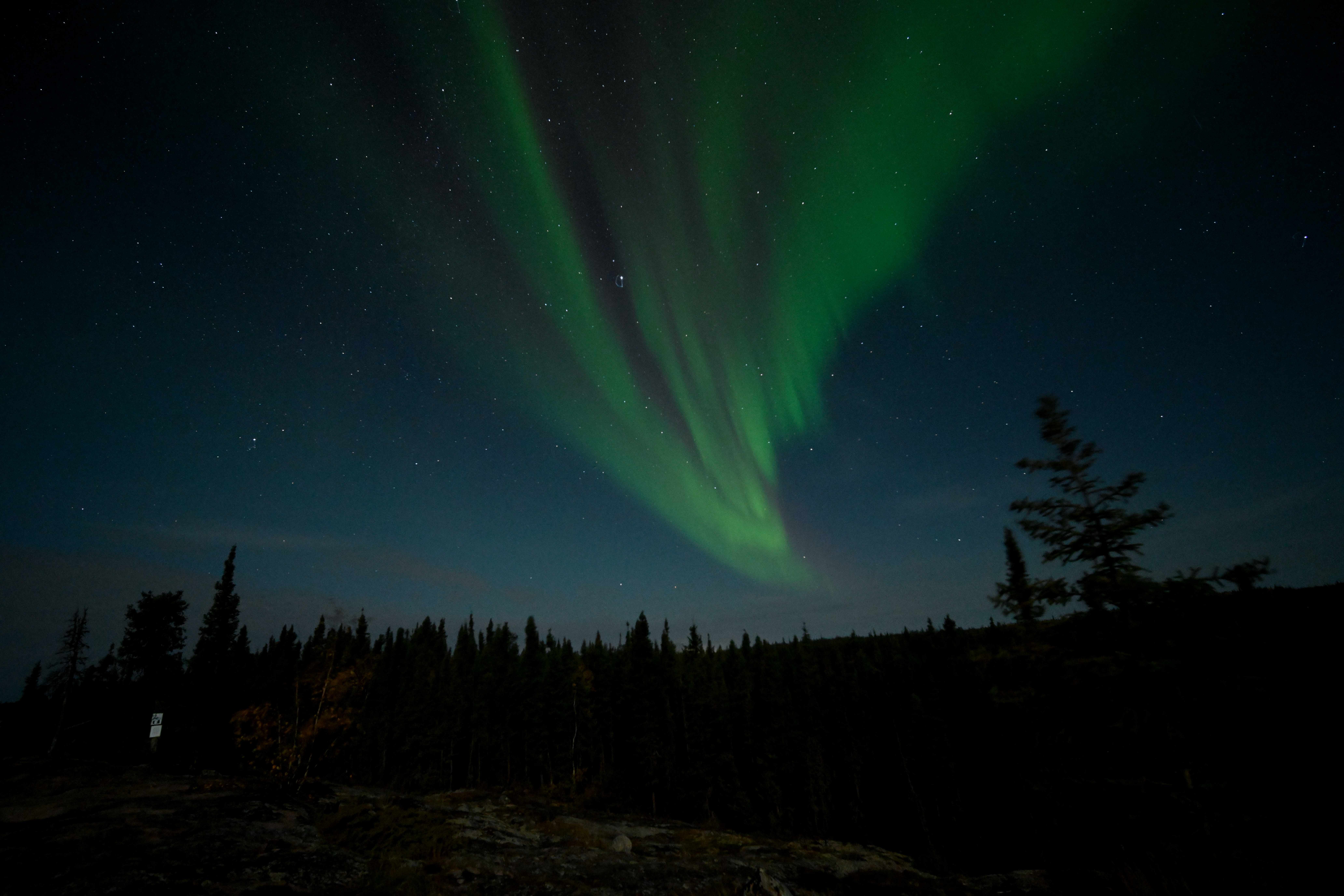
In His Dark Materials, the northern lights represent the thin barrier between the known and the unknown, the physical and metaphysical, and the struggle between open inquiry and dogmatic control. They represent a doorway between worlds that Lyra must navigate.
The first book of His Dark Materials opens with an excerpt from Paradise Lost that includes imagery of a womb, graves and, twice, the idea of an abyss. We’re in this abyssal cycle of death and birth, destined to keep fighting. Unless! Unless!
“unless the almighty maker them ordain / His dark materials to create more worlds.”
We can imagine and create new ways to be.
There is something much larger, even if shimmering, even if inconstant, than us. And that’s too fucking beautiful, too important, to not slow down to see.
⛰️Creative Coalition: The Ground Itself — September 21, 10-12:30 PT
A place-making game about the echoes and traces we leave for others after we are gone.
Over 2.5 hours, I'll guide you through the storytelling game The Ground Itself by Everest Pipkin. Come talk change, memory, and the ground itself.
September 21, 10-12:30 PM PT
Limit 5
Base price: $150
Some seats will always be free for the curious or cash-strapped. There are two full scholarships this month. Email or DM to claim them.
Paid subscribers get 50% off using the code in the chat.
🏔️ Ready to make space a place? Sign up here!
Takeaway Practice
When was the last time you felt awe?
Awe has roots in fear, terror, and “great reverence.” “Awesome” shares roots with “awful.”
I find it ironic (Morrisettian definition) that in a time of such fear and terror, there is such little awe. Awe naturally makes one aware of their smallness, their vulnerability, their dependence on the land and others.
When have you felt awe? What would it feel like to evoke awe in relation to recent events?
Bio
Logan Juliano, PhD (they/them) is a queer, transracial adoptee with a PhD in Performance Studies and lecturer at the University of California, Los Angeles. They do all the Light Hive things, co-edit Notes from the Inflection Point, where they write to share reflections and practices amid ecological and social uncertainty. They aspire to take more vacations, but will settle with uncovering more ways to understand the land they currently occupy.